
Shop Cutlery
Chef Curated Artisan Knives
Kitchen Knife Sharpening
Kitchen Blade Repair
Services And Upgrades
Services FAQ
Knife Buyback Program
Gifts To Cherish For Generations
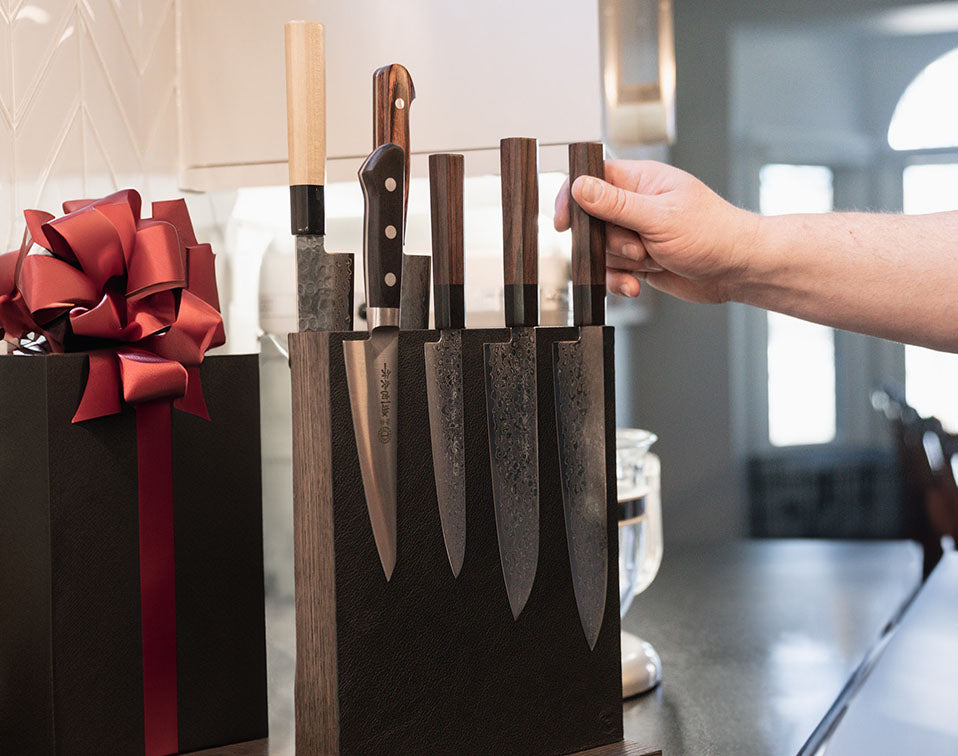
Gift a slice of excellence to the culinary explorer or aspiring chef in your life with a top-tier knife or kitchen tool, expertly crafted to enhance their kitchen adventures.
All About Knives
Learning Center
About Element Knife Company
Learn more about our story and how Chef Elan found his way to curating the best cutlery in the world.
All Purpose / Versatile
Vegetables
Small Tasks & Utility
Bread
Cheese & Tomato
Tableware
Slicing & Carving
Meat Butchery
Fish Butchery
Pro Sushi Prep
Sushi At Home
Knife Sets
All Knives
Gyuto & Chef Knife
Santoku & Bunka
Nakiri
Petty & Utility
Paring
Serrated
Cheese Knife
Slicing Knife
Steak Knives
Boning & Fillet
Meat Cleaver
Honesuki
Garasuki
Sujihiki
Funayuki
Yanagi
Takohiki
Fuguhiki
Kiritsuke
Usuba
Deba
Knife Sets
Glestain
Gohumanosuke Yoshihiro
Ittetsu
Kasane Cutlery
Kikuichi Cutlery
Kyocera
Masutani Hamono
Motokyuuchi
Messermeister
Metalwork By Meola
Ryujin
Sakai Takayuki
Steelport Knife Co.
Sukenari
Touroku Sakai
Takeshi Saji
A. Stravers Cutlery
Tetsujin Knife Labo
Kato Hamono
Aaron Mills


Edge, & Blade Geometry Overview
Double-Bevel Blade Geometry
Offset Double-Bevel Blade Geometry
Double-Bevel Edge Geometry
Single-Bevel

Knife Balance Explained: What Really Makes a Kitchen Knife Feel Right?
When people talk about knife balance, they often picture the classic method of resting a knife on one finger and seeing where it tips. It looks neat, and it makes for a good visual. But in real kitchen use, balance is a little more complex than that.
A knife can balance in one spot when held still, and still not feel especially natural once it starts moving through food. On the flip side, a knife that looks slightly blade-heavy or handle-heavy in a static test can feel excellent once you put it to work.
That is the bigger conversation. Knife balance is not only about a fulcrum point. It is about how the knife moves in your hand, how the weight is distributed, and whether it feels like an extension of your hand once you start cutting.
Why Knife Balance Matters
A well-balanced kitchen knife tends to feel easier to control. It can reduce fatigue, improve precision, and make prep more enjoyable over time. That does not mean every good knife has to balance in the exact same spot. It means the knife’s design, weight distribution, and handle construction should work together to feel natural in motion.
For home cooks, that can mean less strain during a long prep session. For professional cooks, it can make a real difference when a knife is in hand for hours at a time. Either way, good balance helps a knife feel like it wants to work with you rather than against you.

The Fulcrum Test Is Only Part of the Story
Static balance vs. functional balance
The “balance on a finger” test shows you one thing: where the weight settles when the knife is held still. That can be useful, but it is not the whole picture.
Kitchen knives are not designed to sit motionless on your fingertip. They are designed to move. They slice, chop, mince, drag-cut, push-cut, and rock through ingredients. Once the knife is in motion and your grip is correct, the balance you feel is influenced by much more than a single static point.
This is where people can get tripped up. They might assume a knife is poorly balanced because it tips slightly in one direction during a still test. But that same knife can feel fantastic once you grip it properly and start using it on the board.

Handle Style Changes the Feel
Japanese handles and Western handles
One of the easiest ways to see this in the knife world is by comparing Japanese and Western handle styles.
Many Japanese knives use a wa handle, often with a hidden tang. These handles are usually lighter, which can make the knife feel more blade-forward in a static test. That does not mean the knife is wrong. In fact, plenty of cooks love that feeling because it can make the knife feel lively and eager through the cut.
Western-style handles are often heavier and are paired with full-tang construction. That extra material in the handle can pull the balance point farther back. Some cooks find that reassuring and stable. Others prefer a lighter, more forward-feeling knife.
Neither is automatically better. They are simply different approaches to balance and feel.

Proper Grip Changes Everything
Why pinch grip matters
A knife can feel very different depending on how you hold it. If you grip the handle too far back, the knife may feel less controlled and more awkward than it really is. Once you move into a proper pinch grip, with your thumb and index finger controlling the blade near the handle, the whole knife feels more natural.
That is one of the biggest reasons static balance tests only go so far. Your actual grip changes the center of control. It changes how the knife pivots, how it responds, and how connected you feel to the cutting edge.
A lot of knives that seem unusual at first start to make much more sense once they are held properly.
What to Look for in a Balanced Kitchen Knife
Signs a knife feels right in use
When evaluating knife balance, pay attention to questions like these:
- Does the knife feel easy to control?
- Does it track naturally through the cut?
- Do you feel like you are fighting the handle or the blade?
- Does the knife feel fatiguing after a few minutes of use?
- Does it feel stable and predictable with your normal grip?
Those answers matter more than whether the knife balances exactly at the point in front of the handle.

Good Balance Is Personal
Balance is not the same for everyone. Some cooks prefer a more forward-driving feel. Others like more weight in the handle. Hand size, grip style, cutting habits, and experience all play a role.
That is why it helps to think of knife balance less as a strict rule and more as a relationship between the knife and the user. A well-made knife should feel coherent. The blade, handle, geometry, and construction should all work together. Beyond that, personal preference still matters.
Final Thoughts on Knife Balance
Knife balance is real, but it is often misunderstood. It is not simply about finding a fulcrum on one finger and calling it quits. It is about how a knife behaves once it is in your hand and as it moves through food.
A good knife should feel connected, controlled, and comfortable. It should make sense in motion. Whether that knife has a lighter Japanese handle, a heavier Western handle, a hidden tang, or a full tang, the bigger question is the same: Does it feel right when you use it?
That is where real balance shows up.
If you are curious about how different knives feel in your hand, stop by Element Knife Company in Denver or explore our chef-curated collection online. Sometimes the best way to understand balance is to pick up a few knives and let the board decide.
To explore more topics on knife types, metallurgy and more, check out our Learn Center.
- Choosing a selection results in a full page refresh.
!