Services
We sharpen most styles of kitchen knives, including Japanese and Western knives, double-bevel and single-bevel knives, serrated knives and ceramic knives. We also offer machine sharpening for pocket knives. We do not service scissors, swords, lawn equipment or other non-knife tools. If you have an unusual knife or are unsure whether we can service it, contact the shop and we’ll be happy to take a look.
Absolutely. We sharpen kitchen knives regardless of where they were purchased or who manufactured them. Our sharpening and repair services are available for everything from everyday household cutlery to professional and specialty Japanese knives.
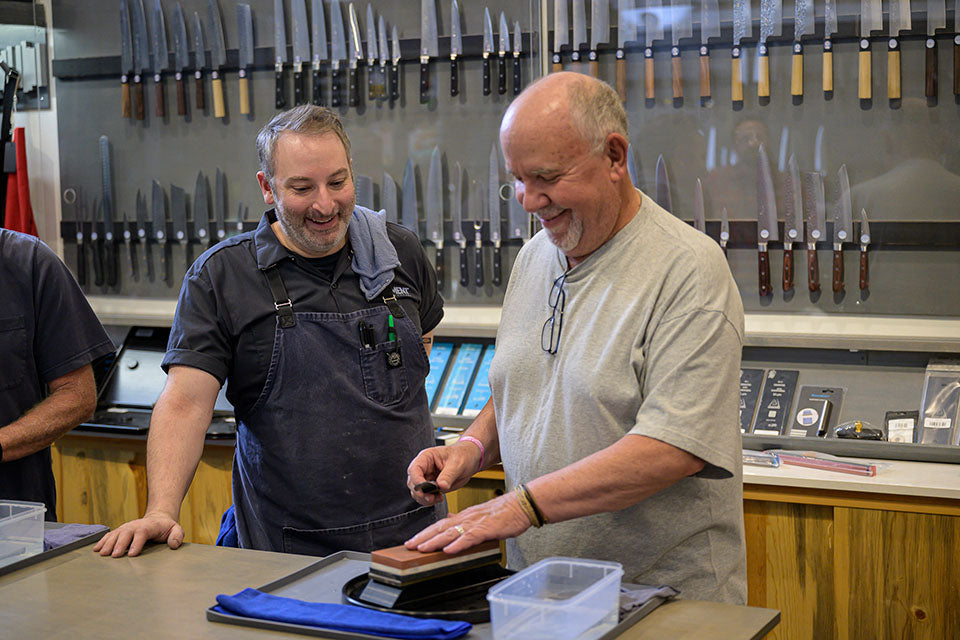
Our hand-sharpening service follows Japanese Waterstone methods using an 8-to-12-step progression of natural and ceramic stones, followed by multiple stropping stages. Belt sharpening uses a six-step machine-assisted process to reshape, refine and polish the edge before final stropping. Both services produce a sharp, functional edge, while hand sharpening provides greater control and refinement for premium, specialty and Japanese cutlery.
That depends on the knife, its steel, geometry, condition and how you use it. Hand sharpening is an excellent choice for Japanese, premium and specialty knives or when greater control over the existing geometry is desired. Belt sharpening provides an efficient and economical option for many everyday double-bevel kitchen knives. If you’re unsure, bring us the knife and we’ll recommend the appropriate service after inspecting it.
Yes. We evaluate each knife individually rather than applying the same predetermined angle to every blade. Kitchen knives are generally sharpened between approximately 15° and 18° per side depending on their construction, steel, existing geometry and intended use. We can also maintain asymmetrical edges and accommodate special edge requests when appropriate.
Yes. Single-bevel knives require a different sharpening method from conventional double-bevel knives because of their specialized blade and edge geometry. We sharpen them by hand using Japanese Waterstone methods designed to maintain and refine their unique geometry.
Yes. We sharpen most conventional serrated knives using specialized wheels and abrasives that allow us to work with the individual serrations while maintaining the functional shape of the cutting edge. We do not sharpen micro-serrated knives, and some specialty serration patterns, including certain wavy or inverted scallop designs, may not be suitable for sharpening. We’re happy to inspect your knife and determine whether it can be properly serviced.
Yes. Because ceramic is substantially different from steel, ceramic knives require specialized diamond abrasives. We use diamond belts and/or wheels to carefully restore and refine ceramic cutting edges.
For most home cooks, every three to six months is a useful guideline, but there is no universal schedule. Steel hardness, frequency of use, cutting technique, cutting-board material and what you’re cutting all influence edge life. Sharpening more frequently generally requires less work each time, while waiting until a knife becomes extremely dull can require a more involved process to reestablish the edge.
Yes. Our machine sharpening service is generally completed the same day and can often be done while you wait, depending on the number of knives and our current workload. Hand sharpening and repairs may also be completed the same day, with most orders ready within 24 hours. We’ll provide an estimated turnaround time when we inspect and check in your knives.
No appointment is required. Knives may be dropped off during regular business hours and are serviced on a first-come, first-served basis. More extensive repairs or specialty work may require additional time, which we can discuss during intake.
We inspect each knife during intake for its overall condition, existing edge and blade geometry, chips, tip damage, bends and other issues that could affect sharpening or require repair. Your knives are documented and kept together throughout the service process, and we’ll discuss any additional work or special requests with you as needed.
Yes. Please bring your knives to us clean and free of food residue, grease and other debris. Knives requiring cleaning before they can be safely serviced are subject to a $10 cleaning fee.
Please secure the cutting edges before transporting your knives. Blade guards, a knife roll or another secure protective covering are good options. Avoid carrying unprotected knives loosely in a bag or container where the blades could move around or cause injury.
If you don’t have your own blade guards or knife bag, we offer reusable felt Element Knife Company tote bags with protective blade sleeves for a small one-time charge. Keep the tote and sleeves with your knives, and you’ll have a convenient way to safely bring them back for future sharpening and carry them home when they’re finished. You’re also welcome to use your own bag, knife roll or protective sleeves.
In most cases, yes. Chips and broken tips can often be repaired by carefully removing and reshaping material while maintaining the knife’s functional profile and geometry. Because every damaged knife is different, we inspect the blade first to determine the appropriate repair and how much material will need to be removed.
Some material must be removed to reach undamaged steel and restore a functional profile, so significant damage can result in a slight change to the blade’s original dimensions or shape. Our goal is to remove only the material necessary while restoring a smooth, functional profile and properly sharpened cutting edge.
Reprofiling corrects the overall cutting profile of a knife rather than simply sharpening its edge. Repeated sharpening, damage or improper grinding can create dips, bumps, flat spots or an uneven belly that prevents the cutting edge from making proper contact with the cutting board. Reprofiling restores a smooth, functional shape before the edge is sharpened.
A knife can be extremely sharp at the edge and still feel thick or resistant when cutting through food. As a knife is repeatedly sharpened, the cutting edge gradually moves into thicker portions of the blade. Thinning removes material behind the cutting edge to restore more efficient blade geometry and improve cutting performance.
On many Western-style knives, repeated sharpening gradually moves the cutting edge upward while the bolster remains in its original position. Eventually, the bolster can extend below the heel of the cutting edge and prevent the knife from making full contact with the cutting board. Bolster grinding removes and reshapes this excess material so the heel and cutting edge can function properly again.
Spine and choil easing are comfort modifications that round and polish sharp or squared edges where your hand contacts the knife. Spine easing softens the top of the blade, while choil easing smooths the area near the heel where the finger commonly rests during a pinch grip. These modifications can noticeably improve comfort during extended knife work.
Our blade buffing and conditioning service can reduce many surface scratches and restore a cleaner, more uniform appearance using progressive Scotch-Brite belts and wheels. Results depend on the depth of the scratches and the knife’s original finish. Deep scratches may not be completely removable without significantly altering the blade surface.
Nano ceramic coating creates an extremely thin, clear protective layer over the blade surface. Once cured, the hard, hydrophobic coating helps water shed more readily while providing additional protection against light scratching, oxidation and tarnishing, making it particularly useful for carbon-steel knives. The coating is also oleophobic, helping repel oils and fats while making the blade easier to clean.
Yes. Our blackening and re-etching service can restore or create a darker etched appearance on compatible blades whose finish has faded or worn with use. Because our process may differ from the manufacturer’s original finishing process, a re-etched blade may not look identical to its original factory finish. We’ll discuss expectations with you before performing the service.
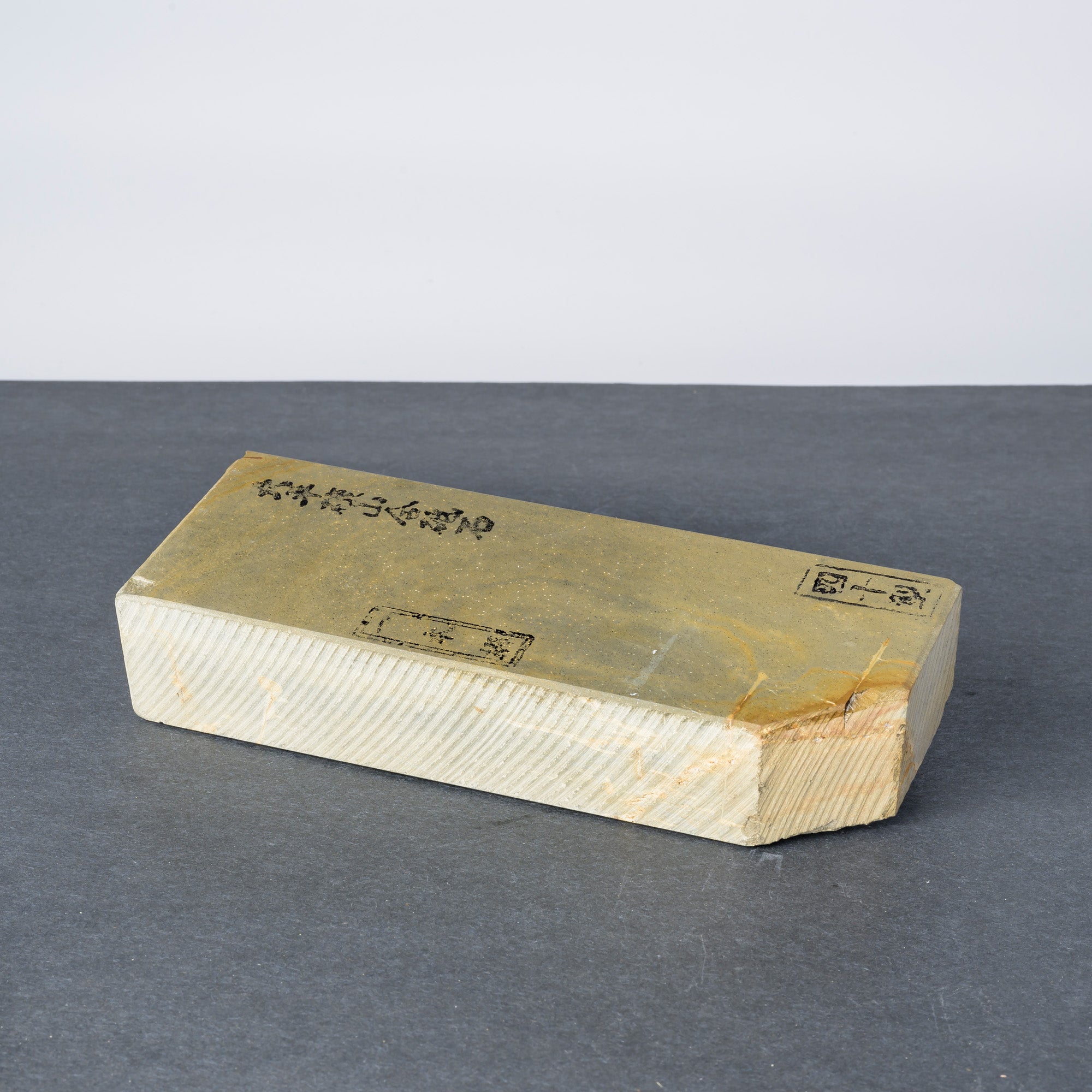
Yes. Waterstones naturally dish, pit and become uneven with use. Our stone-flattening, or lapping, service restores a flat working surface and includes chamfering the edges to remove sharp corners and help reduce chipping.
Yes. We offer replacement services for both Western-style and traditional Japanese wa-handles. Japanese handle replacements are performed in-house, while we partner with local craftsman Akiva Meola of Metalwork by Meola for Western-style replacement handles. Some knife constructions or severely damaged tangs may require additional evaluation before we can determine whether replacement is practical.
Yes. Available materials vary with current inventory and supplier availability, and special materials may be sourced by request. Contact the shop to see what we currently have available or to discuss a particular wood, stabilized material, composite, color or other special request.
Absolutely. Handle replacement isn’t limited to damaged knives. A new handle can change the appearance, feel and fit of a knife and is a great way to personalize or upgrade a blade you already enjoy using.
Our flame-burnishing service is inspired by the Japanese technique of yakisugi. Controlled heat is applied to compatible wooden handles to darken the surface and accentuate the natural grain, creating a distinctive appearance and character. Because wood is a natural material, the final color and grain pattern will vary from handle to handle.
We’ll notify you when your sharpening or repair order is complete and ready for pickup. You can then retrieve your knives during regular business hours.
No two damaged knives are exactly alike. Many broken tips, chips, profile issues and other problems can be repaired, but the feasibility of a repair depends on the knife’s construction, condition and extent of the damage. We inspect the knife before beginning work and will discuss significant concerns or limitations with you.
Bring it in or contact us. Our published services cover the work we perform most frequently, but knives can present unusual geometry, damage or restoration needs. We’re happy to evaluate special requests and determine whether the work is something we can perform.
Element Knife Company offers professional kitchen knife sharpening and repair services at our retail shop in Denver’s LoHi neighborhood at 1701 Platte Street. We sharpen Japanese and Western kitchen knives using both hand-sharpening and machine-sharpening methods, along with specialized services for single-bevel, serrated and ceramic knives. No appointment is required, and knives can be dropped off during regular business hours.
Yes. We sharpen knives for both home cooks and culinary professionals, including individual chefs, restaurants and other food-service businesses. We can service everything from individual knives to larger professional sharpening orders. For larger quantities or ongoing commercial sharpening needs, contact the shop so we can discuss turnaround time and service options.
Browse
!