
Shop Cutlery
Chef Curated Artisan Knives
Kitchen Knife Sharpening
Kitchen Blade Repair
Services And Upgrades
Services FAQ
Knife Buyback Program
Gifts To Cherish For Generations
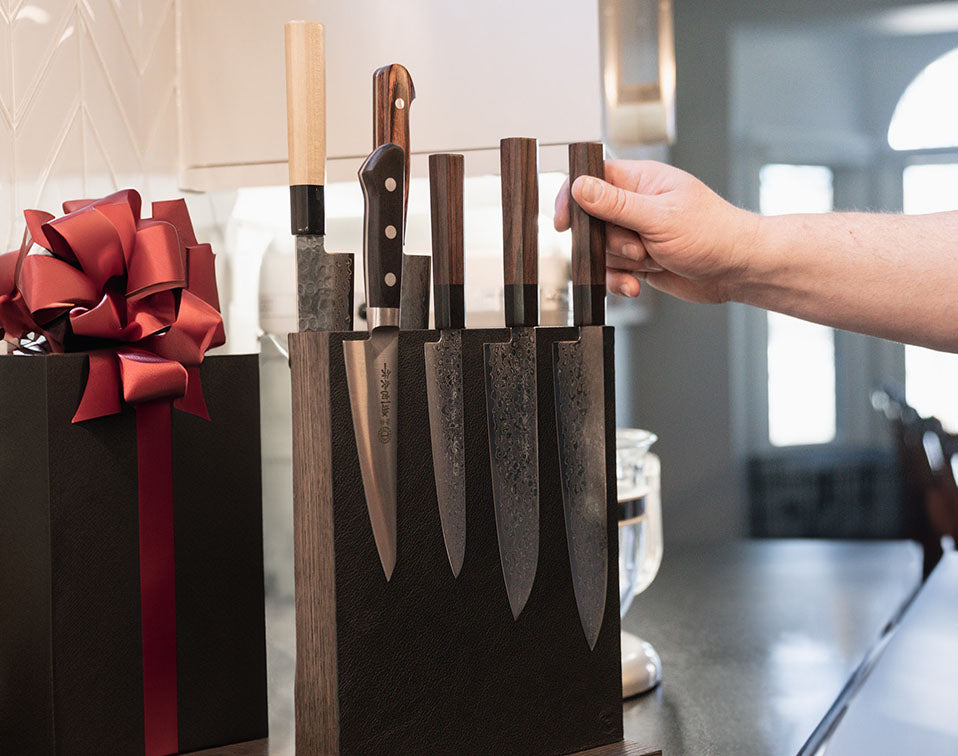
Gift a slice of excellence to the culinary explorer or aspiring chef in your life with a top-tier knife or kitchen tool, expertly crafted to enhance their kitchen adventures.
All About Knives
Learning Center
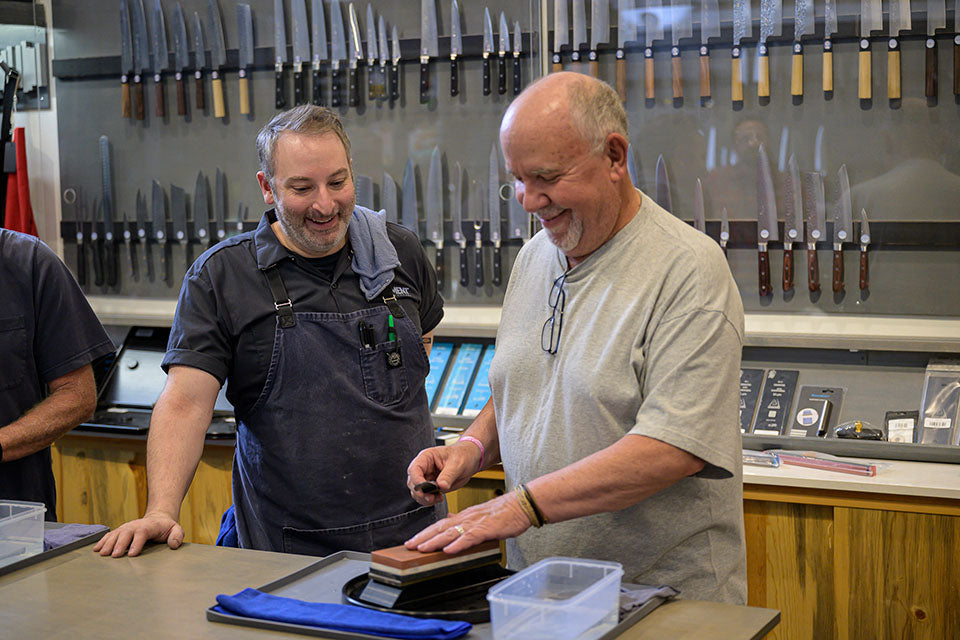
About Element Knife Company
Learn more about our story and how Chef Elan found his way to curating the best cutlery in the world.
All Purpose / Versatile
Vegetables
Small Tasks & Utility
Bread
Cheese & Tomato
Tableware
Slicing & Carving
Meat Butchery
Fish Butchery
Pro Sushi Prep
Sushi At Home
Knife Sets
All Knives
Gyuto & Chef Knife
Santoku & Bunka
Nakiri
Petty & Utility
Paring
Serrated
Cheese Knife
Slicing Knife
Steak Knives
Boning & Fillet
Meat Cleaver
Honesuki
Garasuki
Sujihiki
Funayuki
Yanagi
Takohiki
Fuguhiki
Kiritsuke
Usuba
Deba
Knife Sets
Glestain
Gohumanosuke Yoshihiro
Ittetsu
Kasane Cutlery
Kikuichi Cutlery
Kyocera
Masutani Hamono
Motokyuuchi
Messermeister
Metalwork By Meola
Ryujin
Sakai Takayuki
Steelport Knife Co.
Sukenari
Touroku Sakai
Takeshi Saji
A. Stravers Cutlery
Tetsujin Knife Labo
Kato Hamono
Aaron Mills


Edge, & Blade Geometry Overview
Double-Bevel Blade Geometry
Offset Double-Bevel Blade Geometry
Double-Bevel Edge Geometry
Single-Bevel

Paring Knife vs. Petty Knife: Which Small Knife Do You Actually Need?
A paring knife and a petty knife can look like they belong in the same drawer, and in many ways, they do. Both are small, precise, and useful for detail work, with plenty of overlap when it comes to trimming, coring, peeling, and other close-control tasks. The difference is that a petty knife can also bridge the gap between a paring knife and a larger chef knife when a full-size blade feels like more knife than the job requires.
But once you get them onto a cutting board, the difference becomes much clearer.
The simple question isn't "Which knife is better?" Rather it is:
Where do you do most of your small knife work — in your hand or on the board?
That answer will usually tell you which knife makes more sense.
The Short Version
Choose a paring knife if most of your small prep happens off the cutting board.
Choose a petty knife if you want the precision of a small knife with more control and versatility on the cutting board.
A paring knife is excellent for peeling, trimming, coring, and detail work in your hand. A petty knife can do many of those same jobs, but the added blade length and height make it much more useful once you start slicing, dicing, mincing, and working against the board.

What Is a Paring Knife?
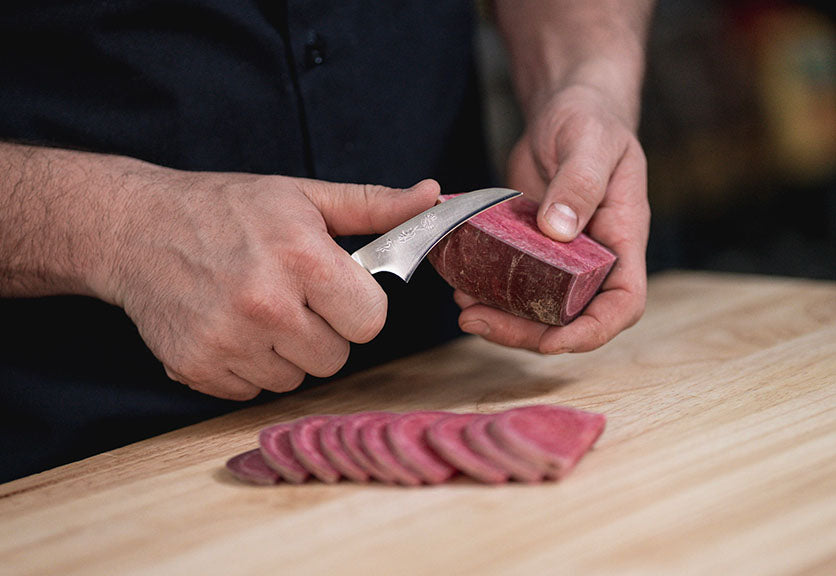
A paring knife is a small, precise kitchen knife designed for close-control tasks. It is usually short, narrow, and easy to maneuver in your hand.
You reach for this knife when food isn't resting flat on the cutting board.
Common paring knife tasks include:
- peeling fruit
- trimming vegetables
- coring strawberries or tomatoes
- removing blemishes
- small decorative cuts
- detail work done in the hand
Think of a paring knife as a precision tool for small, controlled cuts where your hand is guiding the food and the knife at the same time.
Where a Paring Knife Starts to Struggle
A paring knife becomes less comfortable when the work moves to the cutting board.
The blade is usually too short for many board-based tasks. The height is also limited, so there isn't much clearance between your knuckles and the board. That can make tasks like dicing an onion or mincing herbs feel cramped and less confident.
That doesn't mean a paring knife isn't useful. It just means it has a lane.
If you are peeling an apple in your hand, a paring knife makes sense. If you are trying to dice an onion on the board, you will probably want more blade.

What Is a Petty Knife?
A petty knife is a small utility knife with more length and height than a paring knife. It still feels nimble, but it gives you more control on the cutting board.
A petty knife is often one of the most useful secondary knives in the kitchen because it sits between a paring knife and a chef knife or gyuto. It is smaller than your main chef knife, but more capable than a paring knife when board contact matters.
Common petty knife tasks include:
- slicing small fruit
- trimming proteins
- cutting citrus
- dicing shallots or small onions
- mincing garlic or herbs
- push cuts and pull cuts on the board
- small prep where a chef knife feels oversized
A petty knife gives you precision, but it also gives your hand more room to work.

Why Blade Height Matters
Blade height is one of the biggest differences between a paring knife and a petty knife.
A paring knife is narrow. That narrow profile helps when you are working in your hand, but it can be limiting on the cutting board. You don't have much room for your knuckles, and the short blade can make it harder to guide a consistent cut.
A petty knife gives you more height, which creates better clearance and more confidence on the board. You can use a claw grip, bring the point down to the board, and guide the knife through small prep with more control.
That extra height may not seem like much at first, but once you start dicing, slicing, or mincing, it makes a noticeable difference.
Why Blade Length Matters
Length matters too.
A paring knife is intentionally short. That makes it easy to control in your hand, but it limits how much food you can move through in a single cut.
A petty knife is longer, which makes it better suited for slicing and board work. You can make cleaner pull cuts, more confident push cuts, and smoother passes through small ingredients.
If you have ever tried to dice an onion with a paring knife, you know the feeling: the knife technically works, but everything feels tight. The blade is short, the handle is close to the board, and your knuckles do not have much room.
A petty knife gives you just enough extra blade to make that same task feel more natural.
A Quick Shop Anecdote
We see this comparison come up often in the shop.
A customer will pick up a paring knife and say, “This feels great. I just need something small.” And they are not wrong — for peeling, trimming, and off-board work, a paring knife can be exactly right.
But then we ask what they actually want to use it for.
If the answer is “I want something small for onions, garlic, herbs, fruit, and quick prep,” we usually put a petty knife in their hand too. Almost immediately, the difference makes sense. The petty still feels precise, but the extra length and height make it feel much more useful on the board.
That is the important part of buying a small knife: don't think only about size. Think about where the knife will work.
Paring Knife vs. Petty Knife: Which One Should You Buy First?
If you already own a good chef knife, gyuto, or santoku, either a paring knife or petty knife can be a useful addition. The better choice depends on the kind of prep you do most.
If you peel fruit, trim vegetables, core produce, or do a lot of in-hand detail work, a paring knife is a smart choice.
If you want a smaller knife that can still work confidently on the cutting board, a petty knife is usually the more versatile option.
For many home cooks, the petty knife gets more daily use because it covers more ground. It can handle many paring-style tasks, but it also works well for board-based prep. That makes it a strong choice if you want one small knife that can do a little more.

The Best Way to Think About It
A paring knife is best for off-board precision.
A petty knife is best for small prep with more range.
Neither one replaces the other completely. A paring knife is still excellent when the food is in your hand. A petty knife is still small and precise, but it gives you more confidence once the cutting board is involved.
So when you are choosing between the two, skip the question of which knife is “better.” Ask yourself:
Am I mostly working in my hand, or am I working on the board?
That answer will point you toward the right knife.
Final Takeaway
Choose a paring knife if you want a small, controlled blade for peeling, trimming, coring, and detail work in your hand.
Choose a petty knife if you want something equally precise, but more versatile for cutting board tasks like slicing, dicing, push cuts, pull cuts, and mincing.
Both are useful. The right one depends on how you cook — and where you do your small knife work.
- Choosing a selection results in a full page refresh.
!