
Shop Cutlery
Chef Curated Artisan Knives
Kitchen Knife Sharpening
Kitchen Blade Repair
Services And Upgrades
Services FAQ
Knife Buyback Program
Gifts To Cherish For Generations
Gift a slice of excellence to the culinary explorer or aspiring chef in your life with a top-tier knife or kitchen tool, expertly crafted to enhance their kitchen adventures.
All About Knives
Learning Center
About Element Knife Company
Learn more about our story and how Chef Elan found his way to curating the best cutlery in the world.
All Purpose / Versatile
Vegetables
Small Tasks & Utility
Bread
Cheese & Tomato
Tableware
Slicing & Carving
Meat Butchery
Fish Butchery
Pro Sushi Prep
Sushi At Home
Knife Sets
All Knives
Gyuto & Chef Knife
Santoku & Bunka
Nakiri
Petty & Utility
Paring
Serrated
Cheese Knife
Slicing Knife
Steak Knives
Boning & Fillet
Meat Cleaver
Honesuki
Garasuki
Sujihiki
Funayuki
Yanagi
Takohiki
Fuguhiki
Kiritsuke
Usuba
Deba
Knife Sets
Glestain
Gohumanosuke Yoshihiro
Ittetsu
Kasane Cutlery
Kikuichi Cutlery
Kyocera
Masutani Hamono
Motokyuuchi
Messermeister
Metalwork By Meola
Ryujin
Sakai Takayuki
Steelport Knife Co.
Sukenari
Touroku Sakai
Takeshi Saji
A. Stravers Cutlery
Tetsujin Knife Labo
Kato Hamono
Aaron Mills


Edge, & Blade Geometry Overview
Double-Bevel Blade Geometry
Offset Double-Bevel Blade Geometry
Double-Bevel Edge Geometry
Single-Bevel

Cutting Board Workflow Tips for Faster, Cleaner, Safer Prep
Work Smarter on the Board
Imagine it’s a busy weeknight and you’re rushing to get dinner ready. As you chop vegetables, your cutting board quickly fills up with peels, scraps, and half-prepped ingredients. Suddenly, there’s hardly any space left, and you’re scrambling to make room.
A cluttered cutting board makes prep slower, takes up your workspace, and can even be unsafe. The good news is that a few simple habits, not fancy tools or setups, can help you work cleaner, faster, and with more control.
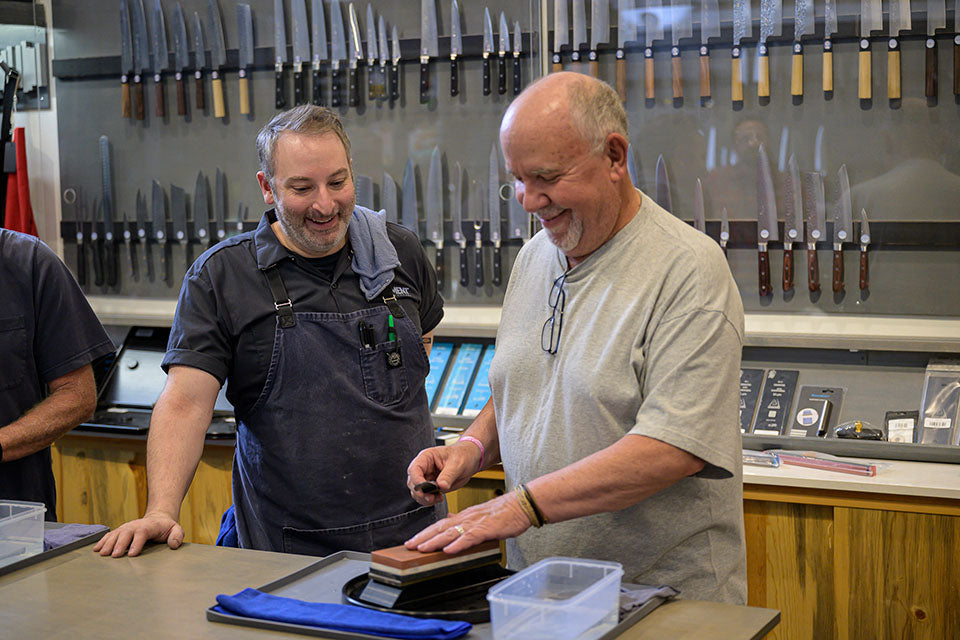
In this video, Chef Elan Wenzel from Element Knife Company shows a cutting board workflow that helps both home cooks and chefs stay organized. The main idea is to get set up before you start cutting.
If your prep area often gets messy while you cook, the next section has some practical tips to help you out.
Start With Mise En Place

Get organized before the first cut.
One easy way to improve your workflow is to use mise en place. This simply means having your ingredients, tools, and containers ready before you start.
You don’t need matching containers. Bowls, mugs, takeout boxes, plates, or bags all work. Use one for finished ingredients and another for scraps to keep your board clear and efficient.
A little organization makes a big difference. When your board isn’t covered in peels and scraps, you have more space and better control over your knife.
Think Like an Assembly Line

Work in stages, not randomly
One of the best tips from Chef Elan is to avoid jumping between tasks. Instead, work like an assembly line.
If you’re cutting carrots, for example, do each step one at a time. First, cut them into lengths. Next, slice into planks, then sticks, and finally dice. Each step prepares you for the next in an organized way.
This kind of workflow helps in a few ways:
- It keeps your movements more consistent.
- It helps you work faster.
- It makes it easier to keep the board tidy.
- It gives you a better sense of control.
When you prep in stages, you don’t have to keep switching tasks or chasing ingredients around. This builds a rhythm, and that makes knife work smoother.
Set Up the Board for Your Dominant Hand

Make the board work with you.
If you’re right-handed, pull ingredients from the left, cut, then move them to the right. If you’re left-handed, do the opposite. This setup makes the workflow comfortable and efficient for everyone.
Your setup might change depending on what you’re cutting or how much space you have, but the goal is always to keep things moving in one direction and avoid extra back-and-forth.
If you start to run out of space, take a moment to reset. Move finished ingredients aside, clear away scraps, and make room to work. This isn’t slowing down—it’s staying in control.
Protect Your Edge While You Prep
Do not scrape with the knife edge.
This is one of those small habits that makes a big difference over time.
If you use the sharp edge of your knife to scrape food across the board, you’re wearing down the part you need most. Instead, turn the knife over and use the spine, or set it down and use a bench scraper or your hands.
This small change helps keep your knife edge sharp for longer. For most home cooks, it’s smart to hone your knives every few uses and sharpen them with a whetstone or professional service every few months, depending on how often you cook. Regular maintenance keeps your knives safe and effective.
Keep the Board Stable and Safe

A moving board is a problem.
A cutting board that slides around is never safe. Before you start, make sure your board is secure. Placing a damp towel, paper towel, or non-slip mat underneath can make a big difference.
If you have a small kitchen, try using a smaller cutting board that fits your counter. Prepping in smaller batches helps keep things manageable and avoids crowding. Even in tight spaces, setting up your station carefully lets you work smoothly and safely. If you’re short on counter space, place a cutting board or sturdy tray over your sink for extra room. Stack containers to keep things organized and within reach, or use a tiered rack to use the space above your prep area. These simple tricks make prepping easier, even in a small kitchen.
A stable board is important for both speed and safety. When your board doesn’t move, your cuts are cleaner and your movements are more predictable.
Keeping things clean is also important for both speed and safety while you prep.
Workflow isn’t just about speed—it’s also about food safety. If you cut raw proteins, don’t move on to vegetables without washing and sanitizing your board first. For a quick clean, wash with hot, soapy water, rinse, and dry. For extra safety, use a diluted bleach solution (one tablespoon of unscented bleach per gallon of water), then rinse and dry. If you prefer not to use bleach, you can sanitize with white vinegar or hydrogen peroxide. Spray or wipe it on, let it sit for a minute or two, then wipe and dry. These gentler methods still help reduce bacteria. Taking this step keeps your prep both safe and efficient.
Chef Elan also points out a few helpful board basics:
Quick board care tips
- Wood cutting boards should never go in the dishwasher.
- Plastic boards are a great choice for raw proteins.
- Softer cutting board surfaces are generally easier on your knife edge.
Build Better Habits in the Kitchen
A clean, organized cutting board isn’t just about looks. It helps you work faster, protect your knife, and stay safe. These habits might seem small at first, but once you get used to them, they stick.
That’s the real goal. Better workflow isn’t about looking fancy—it’s about making your work easier, more consistent, and more enjoyable.
If you’re looking for quality knives, cutting boards, or more practical knife skills tips, visit Element Knife Company in Denver or check out ElementKnife.com.
- Choosing a selection results in a full page refresh.
!