
Shop Cutlery
Chef Curated Artisan Knives
Kitchen Knife Sharpening
Kitchen Blade Repair
Services And Upgrades
Services FAQ
Knife Buyback Program
Gifts To Cherish For Generations
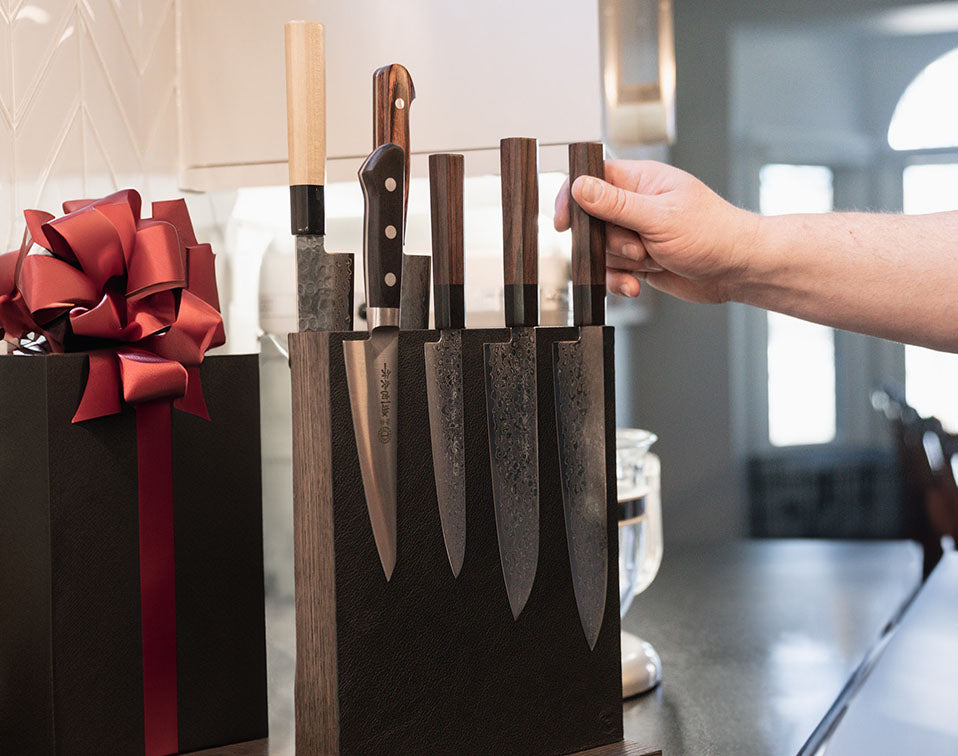
Gift a slice of excellence to the culinary explorer or aspiring chef in your life with a top-tier knife or kitchen tool, expertly crafted to enhance their kitchen adventures.
All About Knives
Learning Center
About Element Knife Company
Learn more about our story and how Chef Elan found his way to curating the best cutlery in the world.
All Purpose / Versatile
Vegetables
Small Tasks & Utility
Bread
Cheese & Tomato
Tableware
Slicing & Carving
Meat Butchery
Fish Butchery
Pro Sushi Prep
Sushi At Home
Knife Sets
All Knives
Gyuto & Chef Knife
Santoku & Bunka
Nakiri
Petty & Utility
Paring
Serrated
Cheese Knife
Slicing Knife
Steak Knives
Boning & Fillet
Meat Cleaver
Honesuki
Garasuki
Sujihiki
Funayuki
Yanagi
Takohiki
Fuguhiki
Kiritsuke
Usuba
Deba
Knife Sets
Glestain
Gohumanosuke Yoshihiro
Ittetsu
Kasane Cutlery
Kikuichi Cutlery
Kyocera
Masutani Hamono
Motokyuuchi
Messermeister
Metalwork By Meola
Ryujin
Sakai Takayuki
Steelport Knife Co.
Sukenari
Touroku Sakai
Takeshi Saji
A. Stravers Cutlery
Tetsujin Knife Labo
Kato Hamono
Aaron Mills


Edge, & Blade Geometry Overview
Double-Bevel Blade Geometry
Offset Double-Bevel Blade Geometry
Double-Bevel Edge Geometry
Single-Bevel

Knife Skills 101: Rock Chop, Push Cut & Essential Cutting Techniques
Would you like to slice vegetables smoothly and confidently, just like a professional chef? Mastering a few effective knife techniques is key.
Many home cooks rely on just one cutting style, often the rock chop. Yet, several knife techniques can help you prep food faster, neater, and more safely. In this guide, you’ll learn the most useful cutting techniques, when to use each, and how to gain better control of your knife.
To get started, watch the full video below to see each technique in action and get a sense of how they work in the kitchen.
Why Knife Technique Matters
Before you explore the techniques, here is the main takeaway:
Using the right motion for the right food:
- Improves consistency
- Reduces fatigue
- Keeps your knife sharper longer
- Makes prep safer
Most importantly, good technique makes cooking more enjoyable.
The Rock Chop (European Technique)

The rock chop is probably the most familiar technique, and there’s a good reason for that.
With this method, the knife tip stays in contact with the cutting board as you rock the heel up and down.
Best for:
- Herbs
- Garlic
- Quick, repetitive chopping
Why it works:
This technique works well with knives that have curved blades, like classic German-style chef knives. The curve lets you rock the knife smoothly without lifting the blade off the board.
Pro tip: Always use the claw grip with your guiding hand. Your knuckles will guide the thickness of your cuts and help protect your fingertips.
The Push Cut (Japanese Technique)

The push cut focuses on precision.
Instead of rocking, the blade:
- Lifts slightly off the board
- Pulls back
- Cuts forward in a smooth motion
The blade stays mostly parallel to the cutting surface.
Best for:
Why it works:
Japanese-style knives usually have less curve, so more of the blade touches the board during a forward cut. This gives you cleaner cuts and less tearing.
The Pullback Technique

This technique is the opposite of the push cut.
You:
- Move the blade forward.
- Cut on the pullback
Best for:
- Delicate foods
- Proteins or soft produce
- Situations where you want minimal pressure
This technique uses less force and lets the blade do the work. It’s especially helpful when you have a very sharp knife.
Mincing for Efficiency

When you mince garlic, herbs, or onions, keeping the knife stable is key.
Place your non-dominant hand on the back of your knife and move the blade up and down through the pile.
Why it works:
- Keeps the blade stable
- Speeds up prep
- Helps preserve consistency
A Smarter Way to Smash Garlic

Try this simple tip—it can make a big difference.
When smashing garlic:
Move the garlic clove to the edge of your cutting board.
This keeps the blade flat on the surface and gives your knuckles space to stay safe.
If you try this in the middle of the board, you risk:
- Losing control
- Bending the blade
- Creating variable pressure
This small change helps keep both your knife and your hands safe.
Drag Cutting for Precision

Drag cutting is a technique that many people overlook.
Instead of pushing or rocking, you drag the tip of the knife through the food along the board.
Best for:
- Fine detail work
- Precision cuts
- Delicate slicing
You can place a finger on the back of the knife to guide your movement, almost as if you’re pointing at your target.
Using a Knife to Peel

A knife isn’t just for chopping. It can also be a great tool for peeling.
You can:
- Peel apples in-hand
- Segment citrus
- Work directly on the cutting board.
For a more advanced technique, try Katsuramuki. This traditional Japanese method lets you peel a vegetable, like daikon, into a continuous sheet.
If you stack those sheets, you can make very fine, even cuts.
To wrap up, remember that technique is another tool in your kitchen arsenal.
So, which technique is best?
The answer is that it depends.
Each method is just a tool. The right one depends on a few things:
- The knife you’re using
- The food you’re cutting
- The result you want
The more techniques you learn, the more control you’ll have in the kitchen.
Remember, good form comes before speed.
Get comfortable with the techniques, stay consistent, and speed will come naturally.
If you want to improve your knife skills even more, check out the guides in our Learning Center.
- Choosing a selection results in a full page refresh.
!