
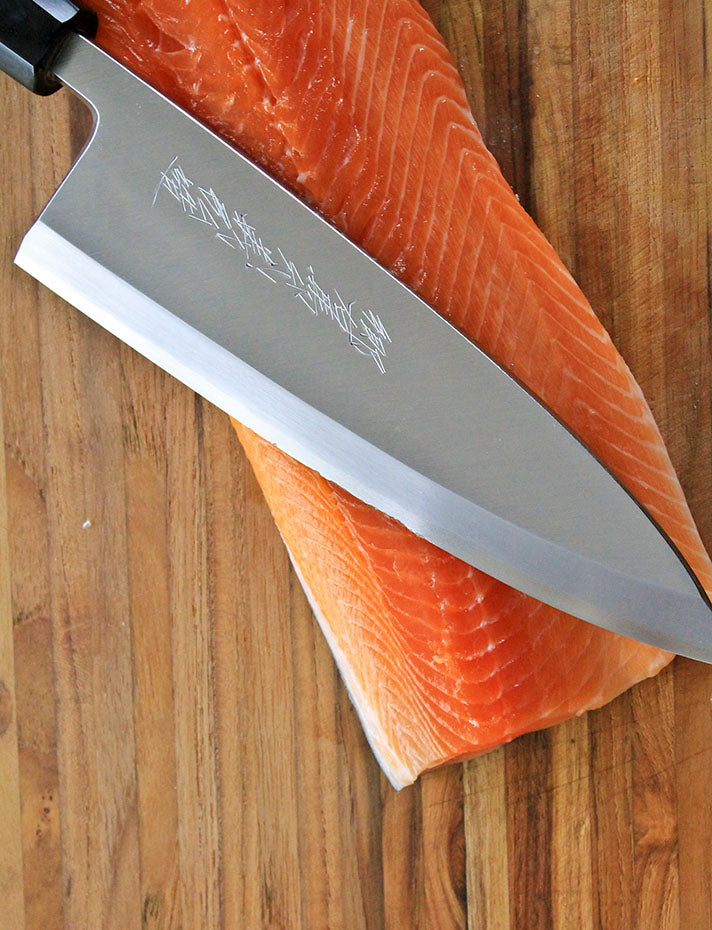
Shop Cutlery
Chef Curated Artisan Knives
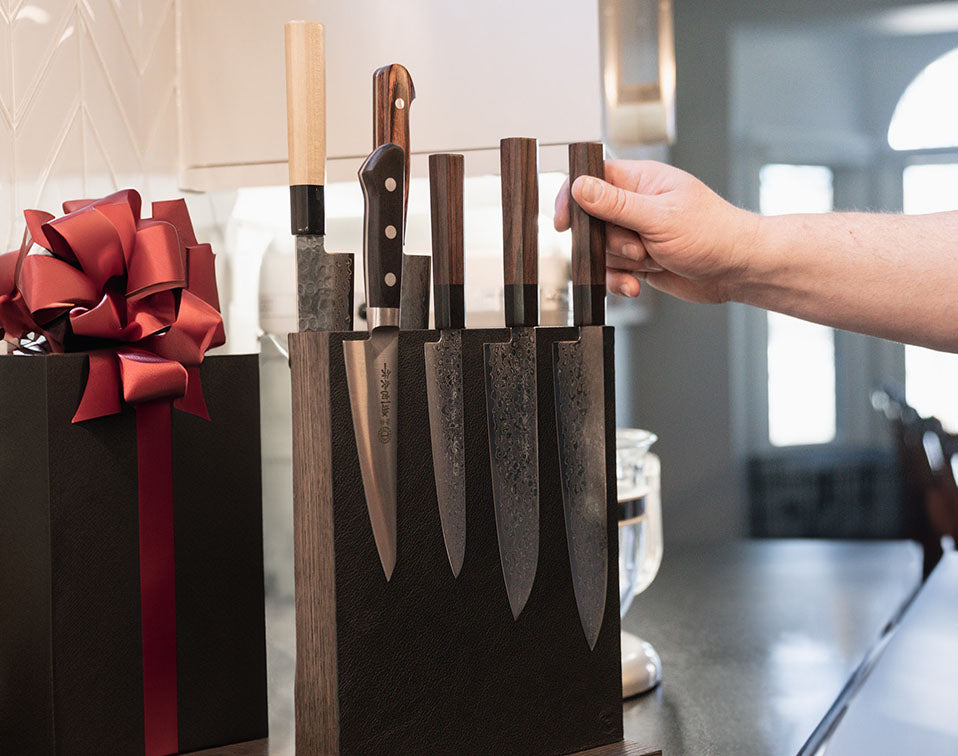
Gifts To Cherish For Generations
Gift a slice of excellence to the culinary explorer or aspiring chef in your life with a top-tier knife or kitchen tool, expertly crafted to enhance their kitchen adventures.
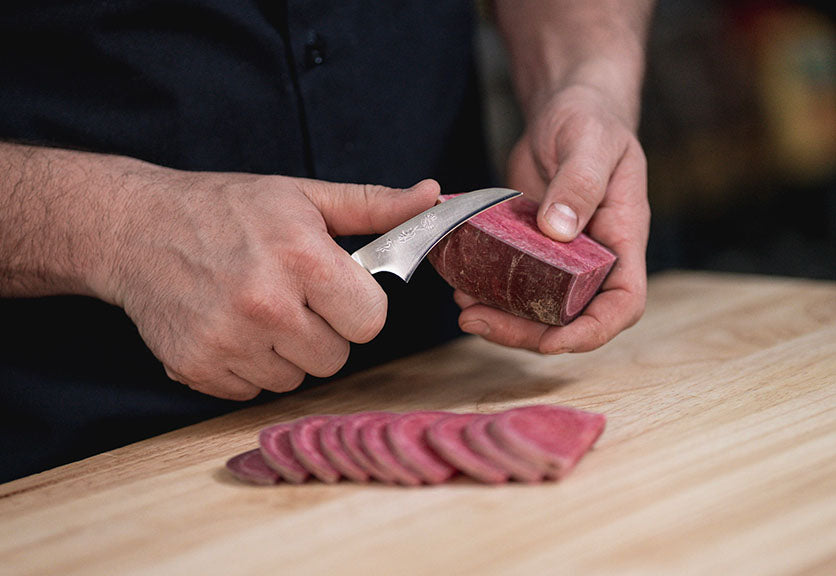
All About Knives
Learning Center
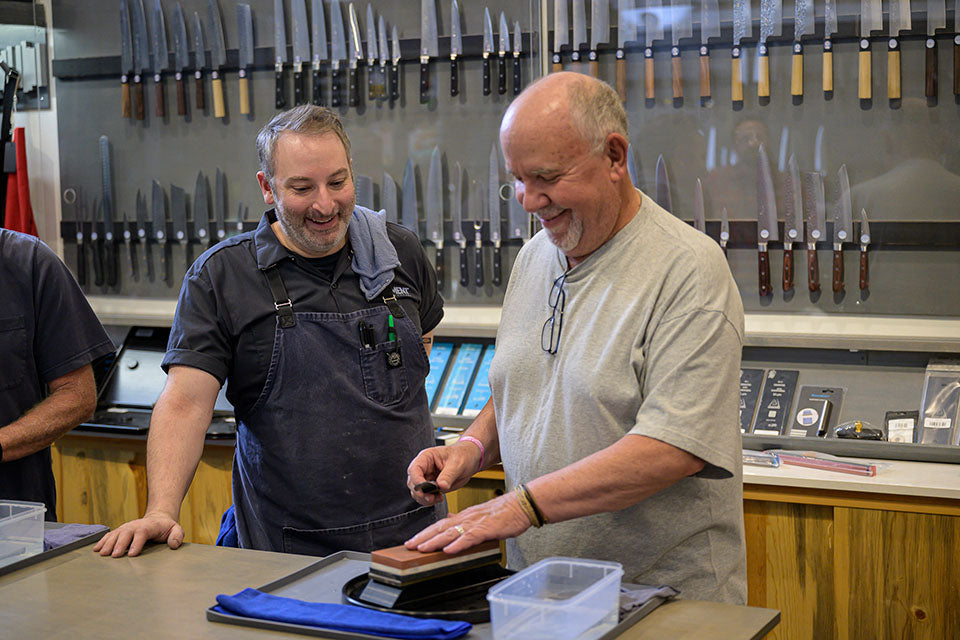
About Element Knife Company
Learn more about our story and how Chef Elan found his way to curating the best cutlery in the world.
All Purpose / Versatile
Vegetables
Small Tasks & Utility
Bread
Cheese & Tomato
Tableware
Slicing & Carving
Meat Butchery
Fish Butchery
Pro Sushi Prep
Sushi At Home
Camping
Everyday Carry
Knife Sets
All Knives
Gyuto & Chef Knife
Santoku & Bunka
Nakiri
Petty & Utility
Paring
Serrated
Cheese Knife
Slicing Knife
Steak Knives
Boning & Fillet
Meat Cleaver
Honesuki
Garasuki
Sujihiki
Funayuki
Yanagi
Takohiki
Fuguhiki
Kiritsuke
Usuba
Deba
Knife Sets
Glestain
Gohumanosuke Yoshihiro
Ittetsu
Kanekoma
Kasane Cutlery
Kikuichi Cutlery
Spyderco
Kyocera
Masutani Hamono
Motokyuuchi
Messermeister
Metalwork By Meola
Ryujin
Sakai Takayuki
Steelport Knife Co.
Sukenari
The James Brand
Touroku Sakai
Takeshi Saji
A. Stravers Cutlery
Tetsujin Knife Labo
Kato Hamono
Aaron Mills


Bevels, Edges, & Geometry Overview
Double-Bevel Symmetrical & Offset
Ryoba - Asymmetrical Double-Bevel
Single-Bevel
Edge & Blade Geometry
Take a closer look at what actually makes a knife cut the way it does. Blade geometry, edge geometry, and grind style all play a role—from single- and double-bevel designs to full flat, hollow, and S-grinds. Once you understand how these elements work—and how sharpening choices affect performance—you’ll be able to choose, use, and maintain your knives with a lot more confidence.
BEVELS, EDGE & BLADE GEOMETRY OVERVIEW
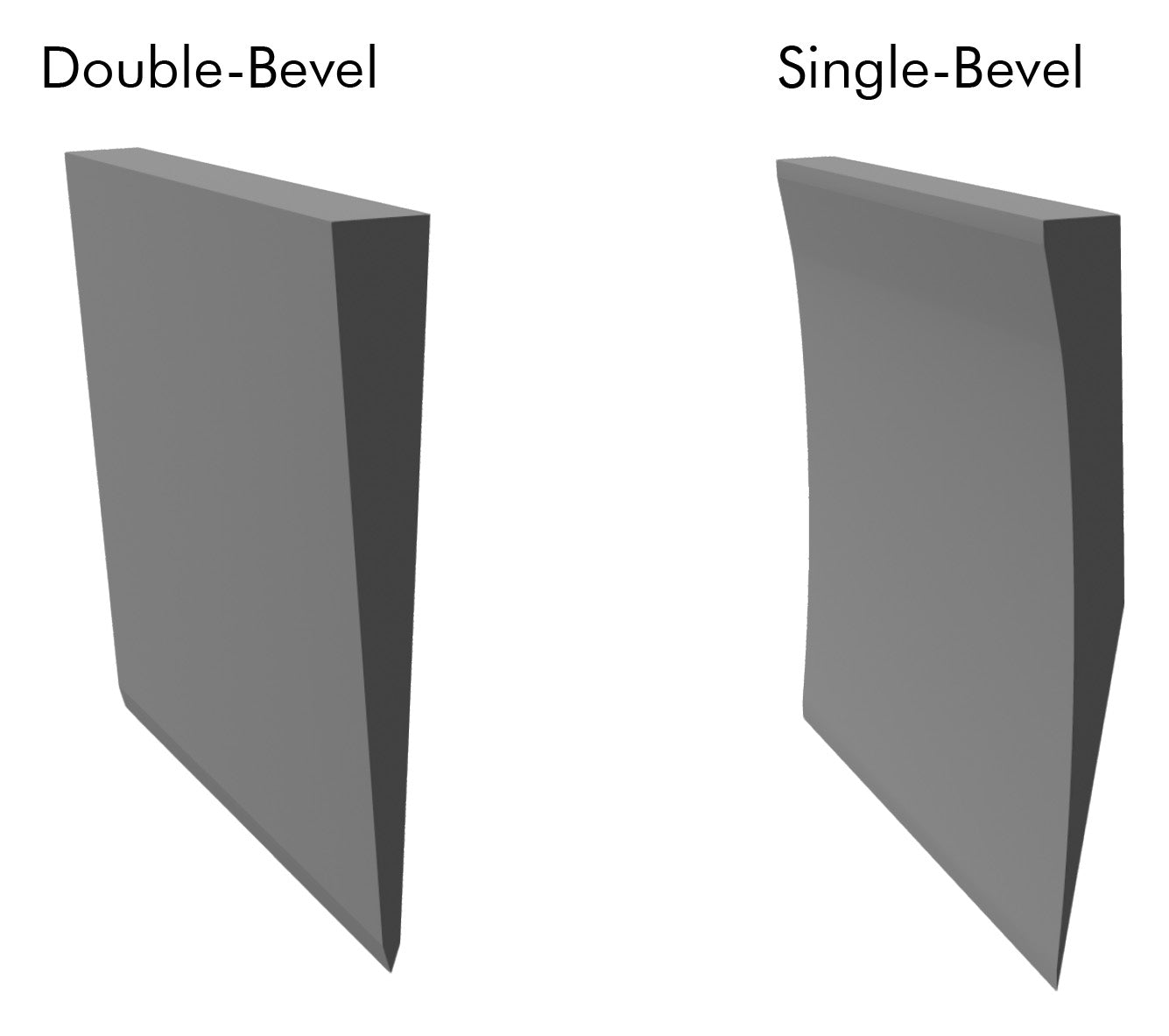
Edge & Blade Geometry
What Is Knife Geometry?
Knife geometry determines how a blade moves through food. It’s shaped by two main elements: the way the blade is formed and the way the edge is sharpened.
Blade geometry in double-bevel knives refers to how the knife tapers from the spine down to the cutting edge. This includes different grind styles—like full flat, half flat, hollow, and S-grinds—as well as whether that taper is even or offset from side to side.
Edge geometry refers to how the cutting edge is applied. On double-bevel knives, the edge is sharpened on both sides—either evenly for a balanced, ambidextrous feel, or unevenly for a more directional cutting experience. When sharpened unevenly, the edge becomes hand-specific, favoring either right- or left-handed use.
Single-bevel knives use a different blade and edge geometry system altogether. Instead of tapering from both sides, the blade is primarily shaped from one side, with a wide bevel on the front and a slightly concave back. This creates a more aggressive taper and highly precise cutting performance, but also makes the knife specific to right- or left-handed use.
Understanding how blade geometry and edge geometry work together gives you more control over how a knife performs—and how it feels in use.
Blade Geometry Types

Full Flat Grind
Even taper from spine to edge for balanced cutting and easy maintenance.

Half Flat Grind
Taper begins midway down the blade, adding strength while maintaining good cutting performance.

Hollow Grind
Concave grind reduces drag and improves food release, with less material behind the edge.

S-Grind
A compound grind with a raised hollow above the edge, improving food release while maintaining strength near the cutting edge.
Double-Bevel Symmetrical & Offset
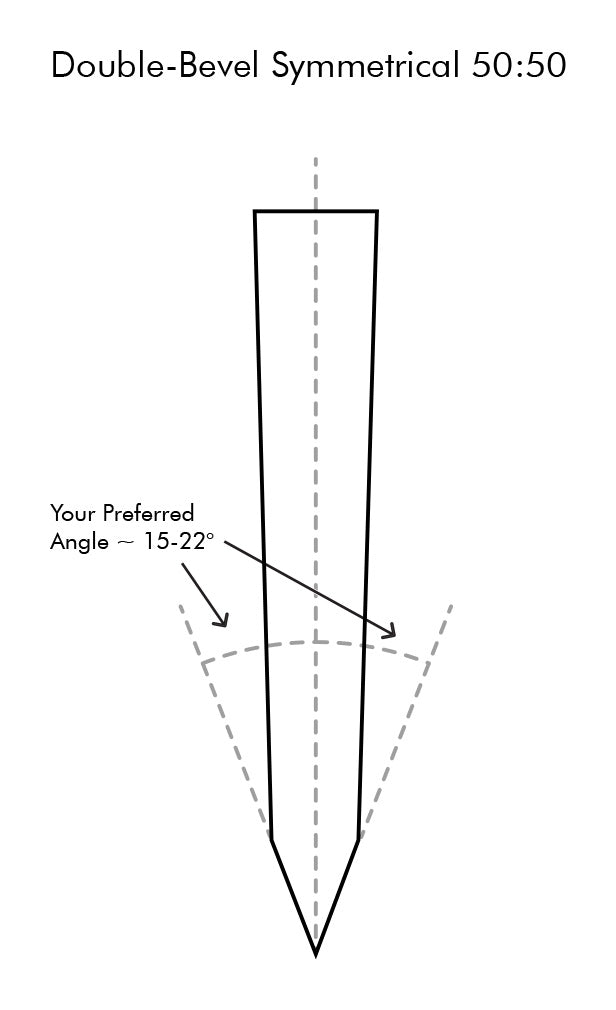
Here, we take a closer look at how both symmetrical and offset cutting edges can be established on blades featuring matching secondary grinds. Symmetrical double-bevel knives offer a 50:50 V-shaped edge. An asymmetrical double-bevel edge will be sharpened more on one side. Sometimes, Japanese manufacturers provide a head start, enabling users to favor the grind on one side, although a symmetrical cutting edge can still be achieved due to the blade’s symmetrical secondary bevel.
Edge & Blade Geometry
Symmetrical Double-Bevel
Symmetrical double-bevel knives have an edge that is ground on both sides of the blade forming a 50:50 symmetrical V-shape. Commonly, German cutlery have thicker blades and are manufactured with edges which are ground at 18° to 22°, although up to 30 degrees is established on Meat Cleavers. A broader edge is stronger, which is important when hammering strikes are used toward bone and the cutting board. Generally, Japanese knives are thin in comparison to German and come with edges ground at 15° to 18°.
Edge & Blade Geometry
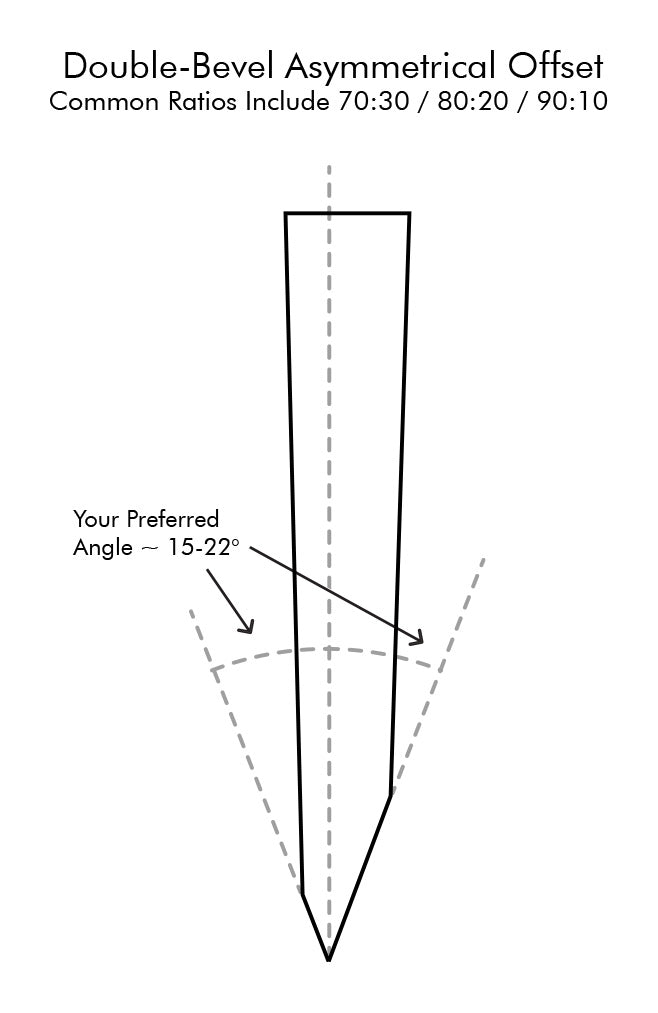
Asymmetrical Double-Bevel (Offset)
Asymmetrical double-bevel edges are most common to Japanese cutlery and are offset accordingly to right- or left-handedness. Often, it is up to the user to establish an offset edge after they purchase the knife. Some Japanese manufacturers understand that chefs have their own edge and sharpening preferences. They purposefully give the purchaser a head start by favoring the grind (cutting edge), usually on the right side of the knife. Additionally, there is a Japanese blade geometry called Ryouba, 両刃. This means that the taper is only on the face of the knife as opposed to both sides. And, the back side is flat. There are three variations of the Ryouba; Full Flat-Ground, Half-Flat Ground, and Curved. Offset bevels are accomplished through percentages, not degrees. Users determine their offset preferences. Common ratios are 70:30, 80:20, or 90:10. Remember, offset edges require matching degrees from side to side, typically 15° to 18°, but are ground more on one side than the other.
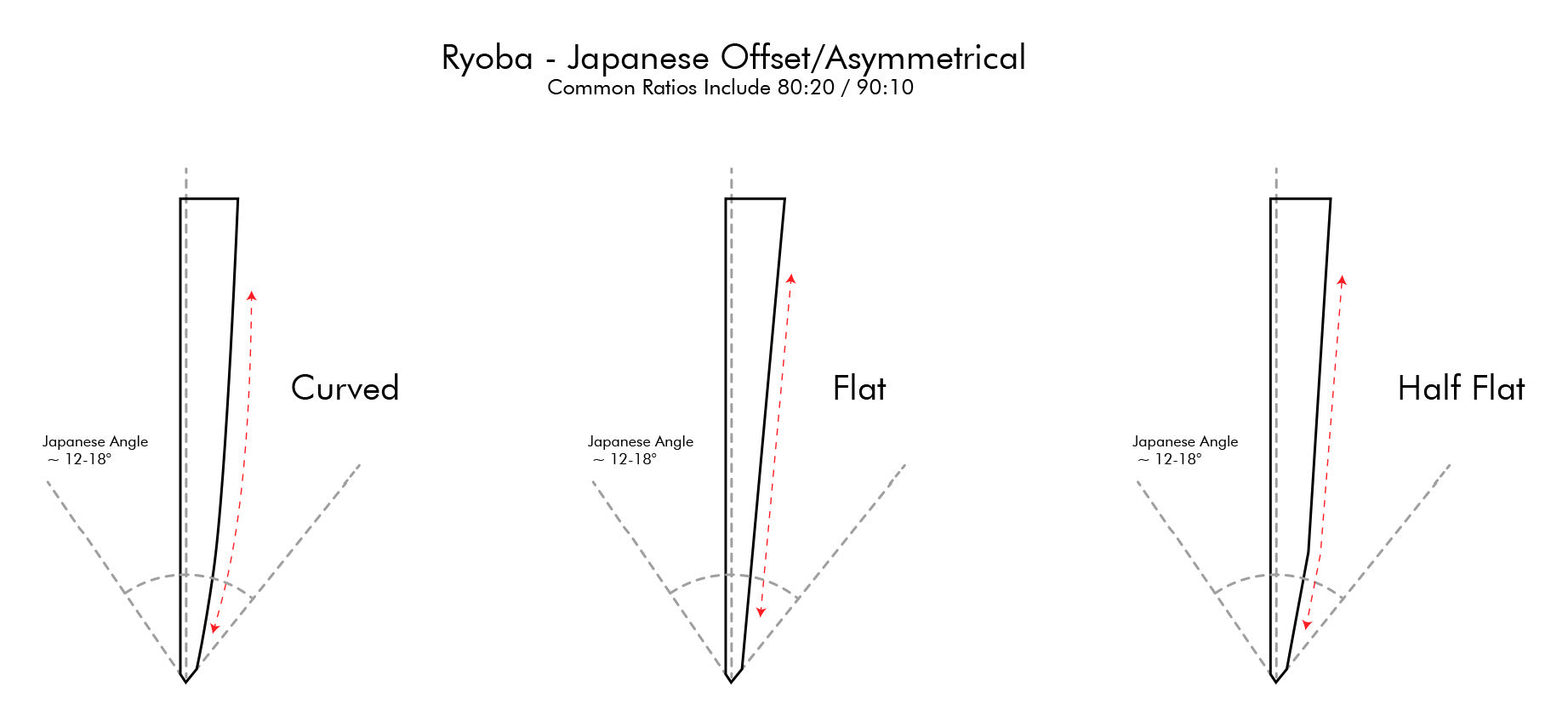
Ryoba - Asymmetrical Double-Bevel (Offset)
Ryoba, 両刃, is a Japanese asymmetrical double-bevel blade geometry design. Meaning that the taper is only on one face (primary side) of the knife (as opposed to both sides) with the back side being flat. There are three variations of the Ryoba; Curved, Full Flat, & Half-Flat. Since the secondary bevels are not symmetrical, the primary bevel (cutting edge) must be offset. Once again, the user determines the offset preferences. Common ratios are 70:30, 80:20, or 90:10. Don’t forget, offset edges require matching degrees from side to side, typically 15° to 18°, but are ground more on one side than the other.
Single-Bevel
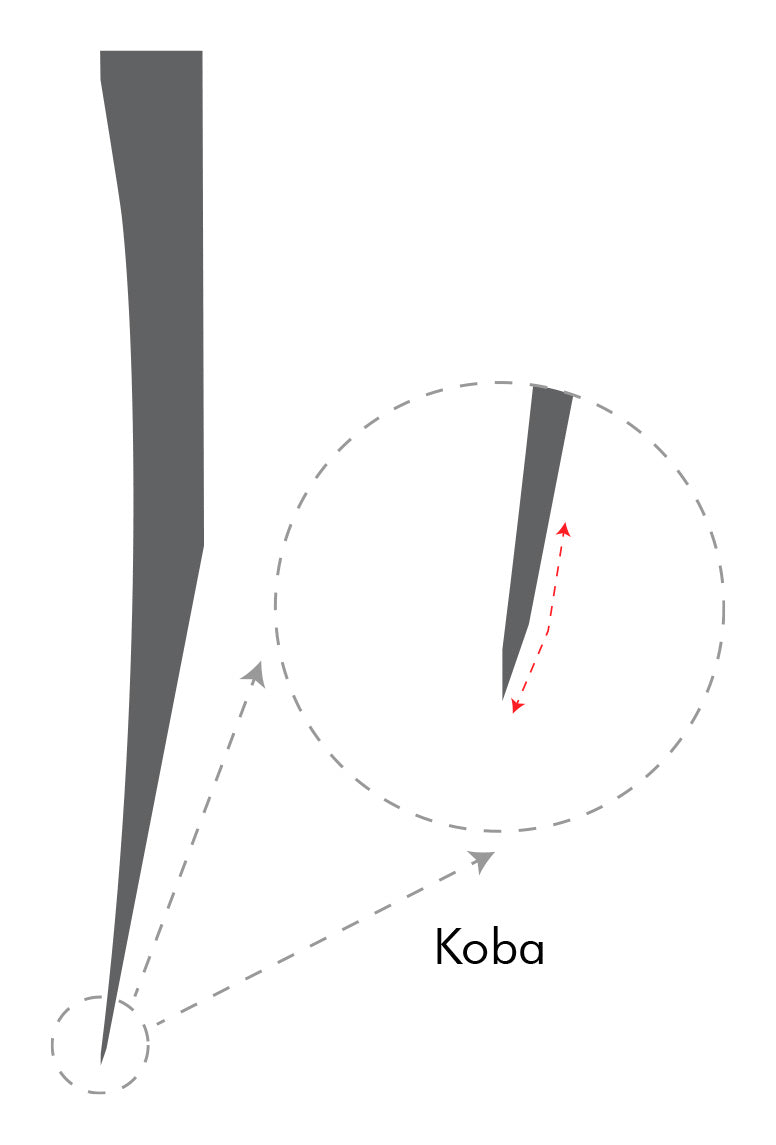
Single-Bevel knives originated in Japan, and are produced in a wide range of shapes and sizes Designed to perform specific tasks such as butchering fish, cutting vegetables, noodles, eel, etc. These Japanese knives are commonplace for professionals in Japanese kitchens, especially Sushi restaurants. This one-sided style of blade has the edge angle on the front with a slight convex shape on the back of the knife. This geometry allows for a much steeper taper that produces a very fine edge, usually 10° to 18°. These precise blades cut delicate food products with ease. A single-bevel knife tends to pull in the opposite direction of the holding hand (it takes practice). Also, single-bevel knives are specific to right- or left-handedness. For Japanese Single-Bevel knives, the degrees are narrower or wider depending on the thickness of the spine. Thicker knives, like a Deba, make for a wider, stronger angle, about an 18° bevel. This thicker knife is used for heavier duty tasks such as fish butchery. A thinner Yanagi, used for precise slicing, will have a narrower, more fragile bevel, approximately 11°. Aside from nuanced edge angles, the overall geometry is always the same, whether left- or right-handed. Within this single-bevel edge geometry, there are three different sharpening techniques, Koba, Hiratogi, & Hamaguriba. Each having its unique benefits and are up to the user of the knife to apply.
Edge & Blade Geometry
Koba
Koba, 小刃, is a style that most manufacturers apply to their single-bevel knives. This essentially puts a micro-bevel at the cutting edge. It’s up to the user of the knife to continue following this technique when resharpening or choose to change to another style. Koba offers a good balance between sharpness and strength.
Edge & Blade Geometry
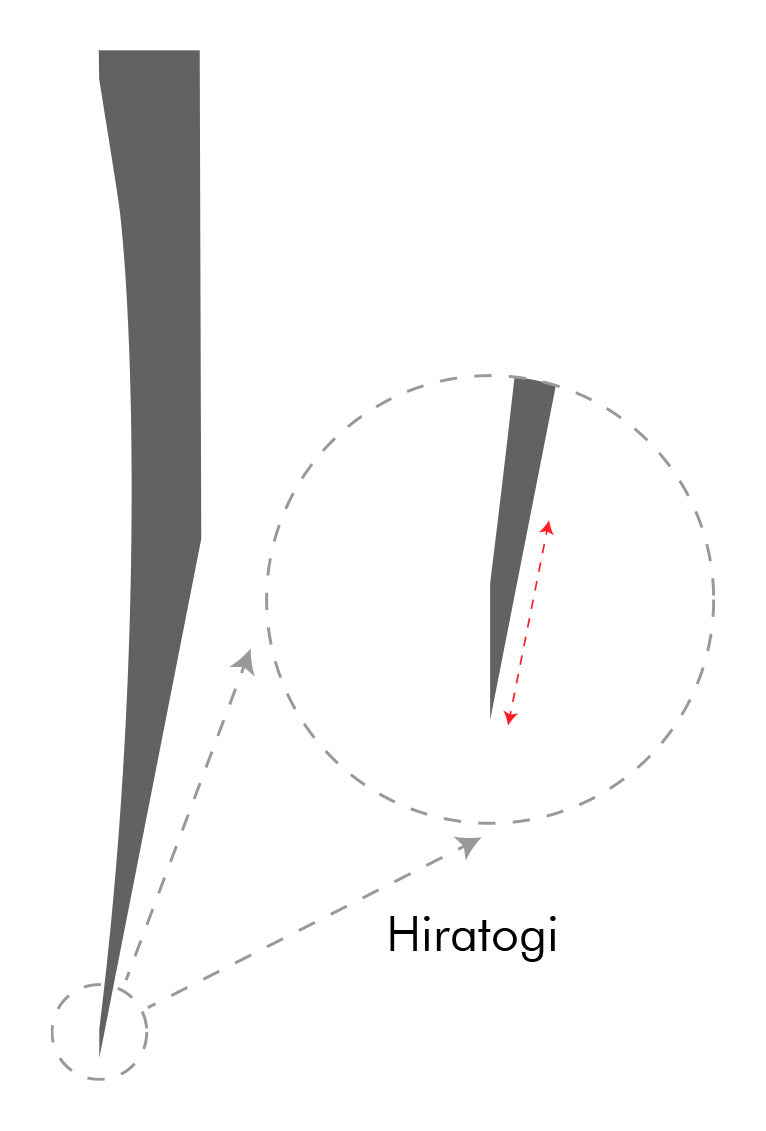
Hiratogi
Hiratogi, 平研ぎ, offers the finest edge. It is very sharp, but more fragile. Commonly applied to slicing knives such as Yanagis, Takohikis, & Kiritsukes. Hiratogi is typically applied by the user of the knife once purchased, but sometimes can be applied by the retail shop that sells it (more common in Japan.) This essentially puts a final edge on the knife, referred to as “Honbadzuke”, which when translated means ‘sharpening to a sharper state’.
Edge & Blade Geometry
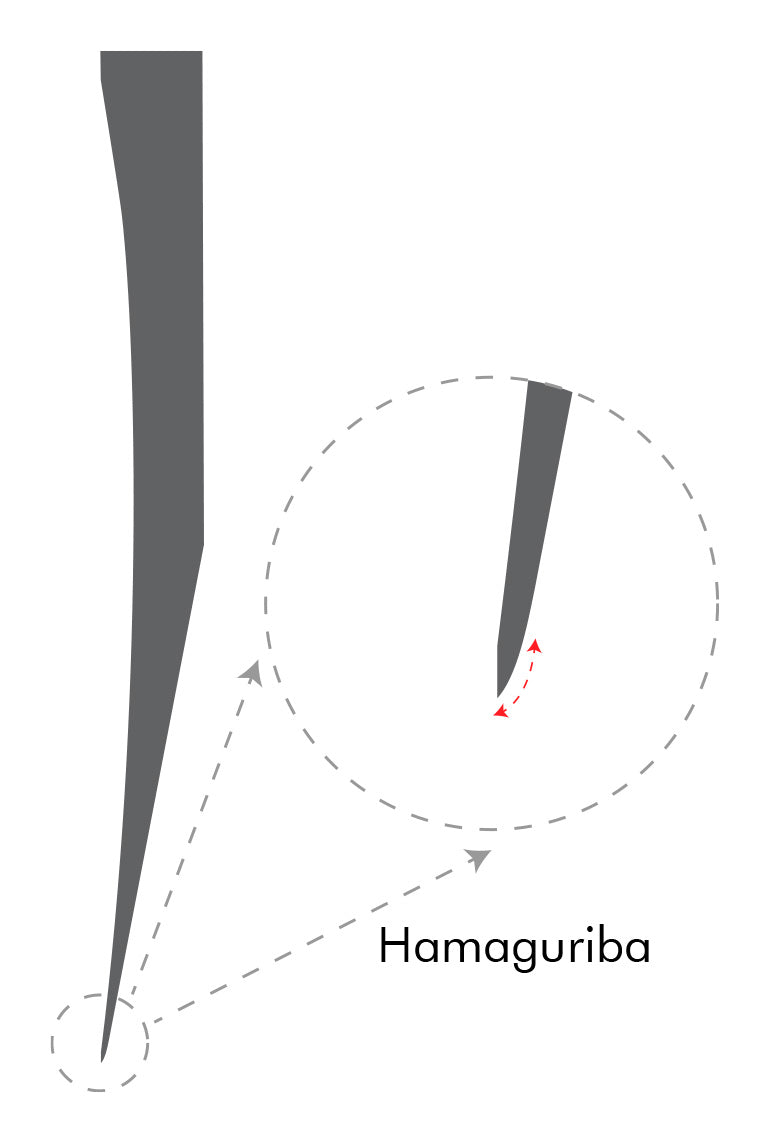
Hamaguriba
Hamaguriba, 蛤, makes for a very strong edge and helps to prevent chipping. It is named after a clam, referencing the clam shell’s rounded shape. This curvature is stronger, which helps strengthen the single-bevel’s inherent fragility. The trade-off is that the edge is less acute, rendering it less sharp. Typically applied to fish butchery knives like the Deba.
Learn Center



- Choosing a selection results in a full page refresh.
!